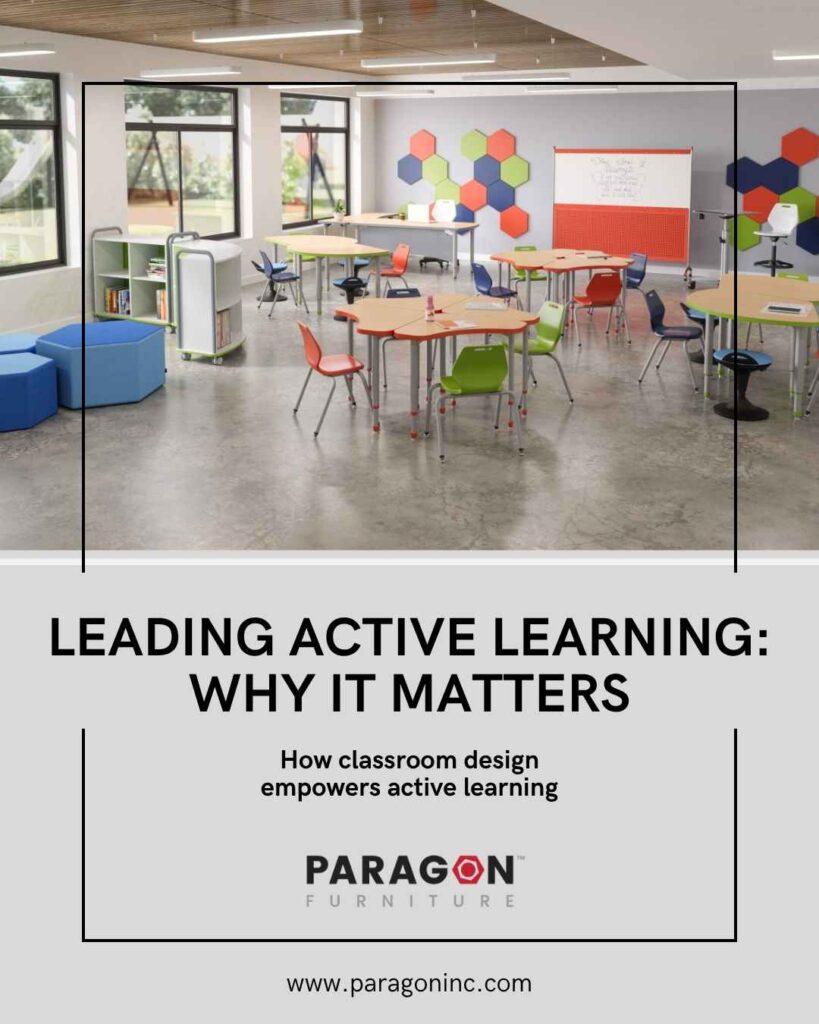
Active learning transforms classrooms into spaces where students don’t just listen, they engage, create and collaborate. From flexible furniture to intentional design, every element plays a role in how students learn and thrive. Learn more about how thoughtful design can lead active learning and shape the future of education.
Active Learning Transforms Students from Passive Listeners to Active Participants
Traditional teaching models often rely on lectures and rote memorization, which can limit student engagement and long-term retention. Active learning changes that dynamic. It invites students to analyze, discuss, and apply new information through collaboration and exploration. This hands-on approach helps them develop problem-solving, communication, and critical thinking skills that extend far beyond the classroom.
Studies show that when students are part of the learning process, rather than just recipients of information, they’re more likely to retain what they learn and stay motivated throughout their educational journey.
Teacher Support and Vision Drive Successful Implementation
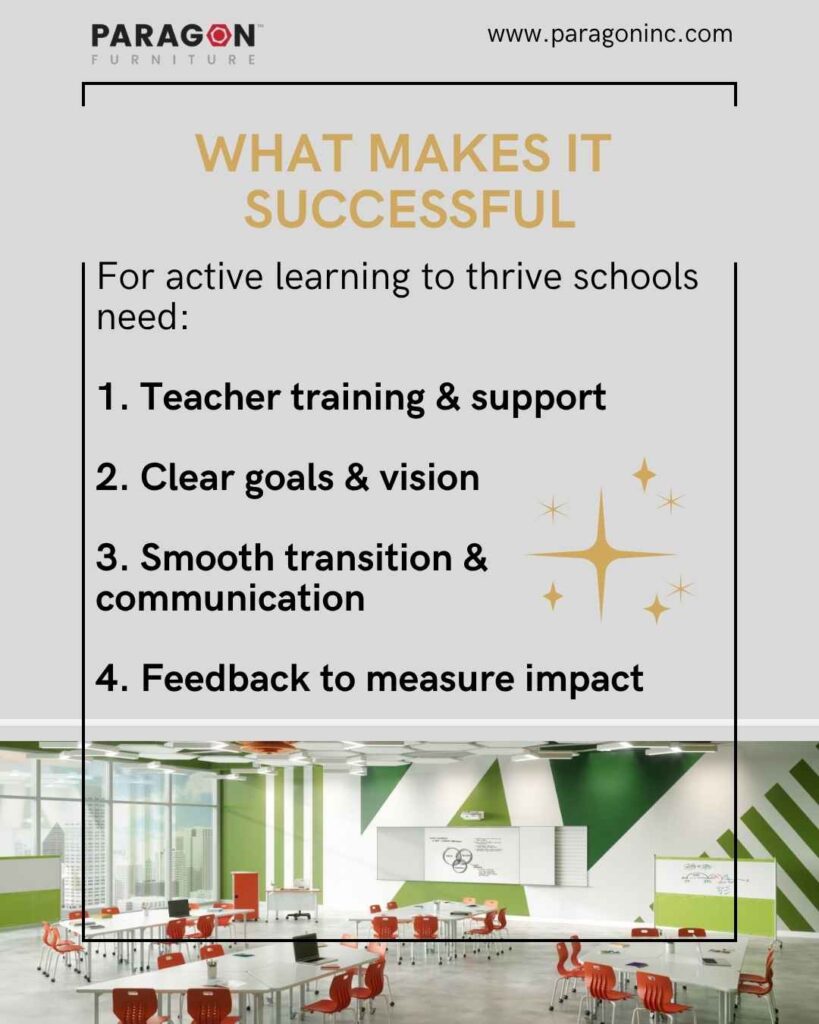
Even the most innovative classroom design can’t succeed without empowered teachers. Educators are at the heart of active learning, and their confidence and preparation make all the difference. Schools that invest in professional development, peer collaboration, and ongoing coaching create the conditions for active learning to thrive.
Teachers must feel supported as they experiment with new methods, facilitate discussions, and manage dynamic classrooms. When leadership communicates a clear vision and provides resources, teachers can focus on cultivating rich, interactive learning experiences for every student.
Purposeful Design Is the Foundation for Engagement
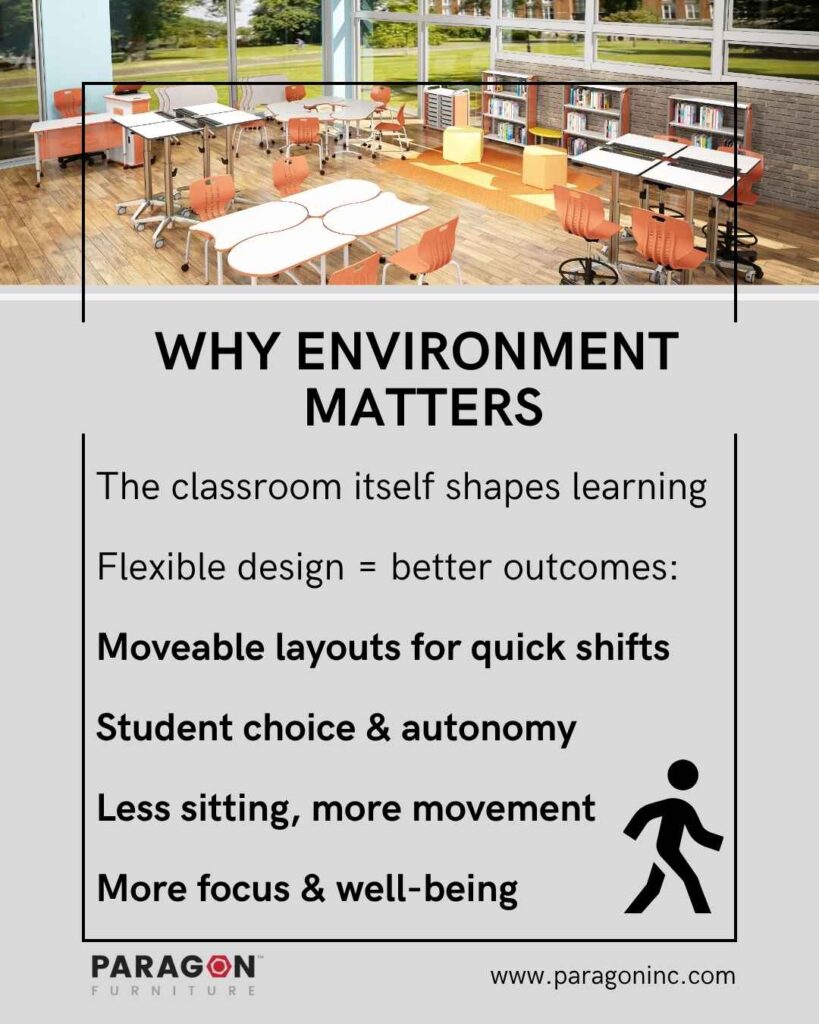
A well-designed classroom isn’t just aesthetically pleasing, it’s functional, adaptable, and intentional. Flexible layouts, movable furniture, and multi-use zones enable teachers and students to shift seamlessly between whole-group instruction, small-group collaboration, and indpendent work.
Design should support choice and comfort, empowering students to learn in ways that suit their needs. Research shows that students who can move, choose their workspace, or change posture throughout the day are more engaged, less fatigued, and better able to focus. In short, design helps make active learning possible.
Measuring Impact Ensures Long-Term Success
Active learning isn’t just a one-time initiative, it’s an evolving process that benefits from consistent reflection and feedback. Schools that collect data from student surveys, classroom observations, and performance assessments can better understand what’s working and where adjustments are needed.
These feedback loops help refine both teaching strategies and classroom design over time. They also give students a voice in shaping their environment, reinforcing a sense of ownership and agency in their learning journey.
The Future of Learning Is Flexible, Collaborative, and Human Centered
As education continues to evolve, active learning is no longer optional, it’s essential. Modern classrooms must respond to diverse learning needs, prioritize student well-being, and foster collaboration and connection.
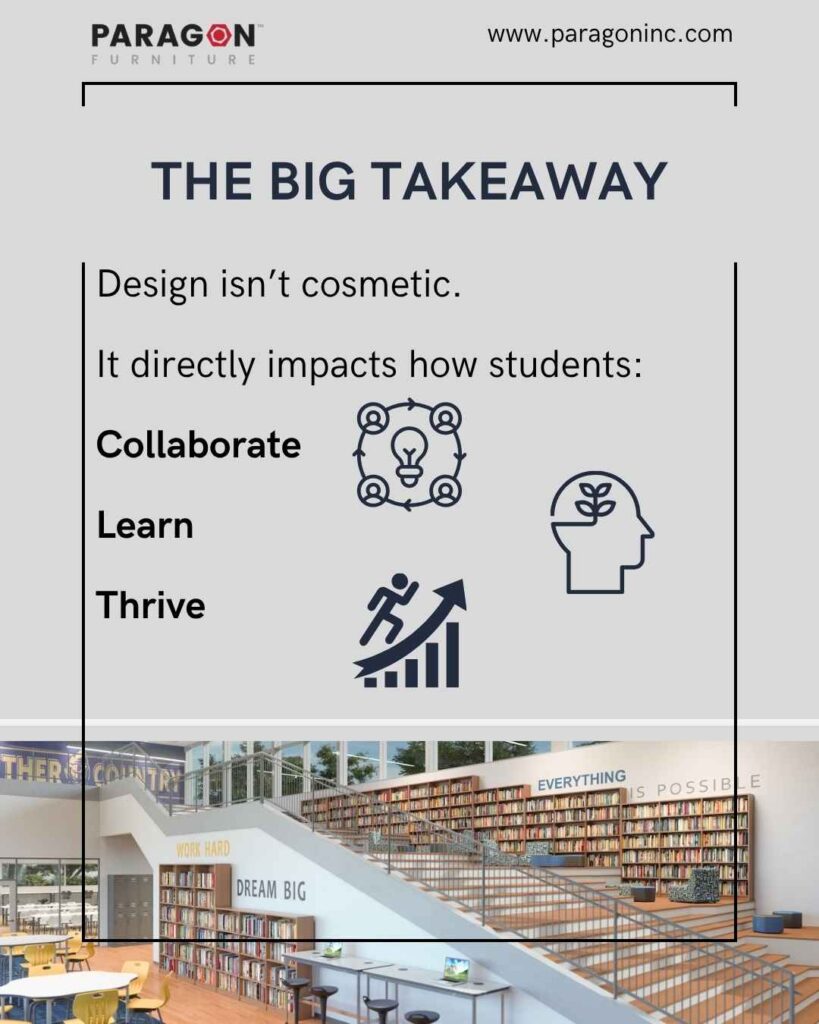
Furniture that supports movement, technology integration that enhances (not replaces) human interaction, and design that cultivates belonging all play key roles in shaping the classrooms of tomorrow. By aligning pedagogy and design, schools can create environments that not only teach content but nurture curiosity, creativity, and community.