How much does the classroom environment really affect student focus and wellbeing? Research says—a lot. In a recent Huberman Lab podcast, Dr. Andrew Huberman spoke with Dr. Marc Berman of the University of Chicago about how our surroundings, especially natural-inspired spaces, shape attention, stress, cognition, and even long-term health.
From restorative design to clutter-free classrooms, the science makes one thing clear: furniture and layout aren’t just functional—they’re essential to student success.
Directed attention (effortful, voluntary focus – like listening to instructions or solving math problem)
Involuntary attention (effortless noticing – like the sound of birdsong or a breeze through the trees)
Directed attention fatigues quickly. But when we experience moments of involuntary attention, our mental resources are replenished. This is why stepping outside or engaging with calming environments restores our focus.
Design in Action:
Rounded furniture and calm lines create “restorative corners” within classrooms.
Shifting layouts throughout the day (desk to soft seating clusters) mirrors nature’s variety and gives the brain a reset.
Soft Fascination, Fractals & Visual Complexity
The Science:
Natural environments contain “soft fascination”—patterns that are interesting but not overwhelming. Leaves, clouds, or rippling water reduce mental strain, unlike harsh or chaotic visuals.
Design in Action:
Woodgrain finishes and natural tones add depth and texture that’s calming.
Furniture that layers materials or uses organic shapes mimics the brain’s preference for soft visual complexity.
Markerboard dividers or display shelves break up space, creating balanced, digestible zones instead of vast, overstimulating walls.
Duration, Dose & Practicality
The Science:
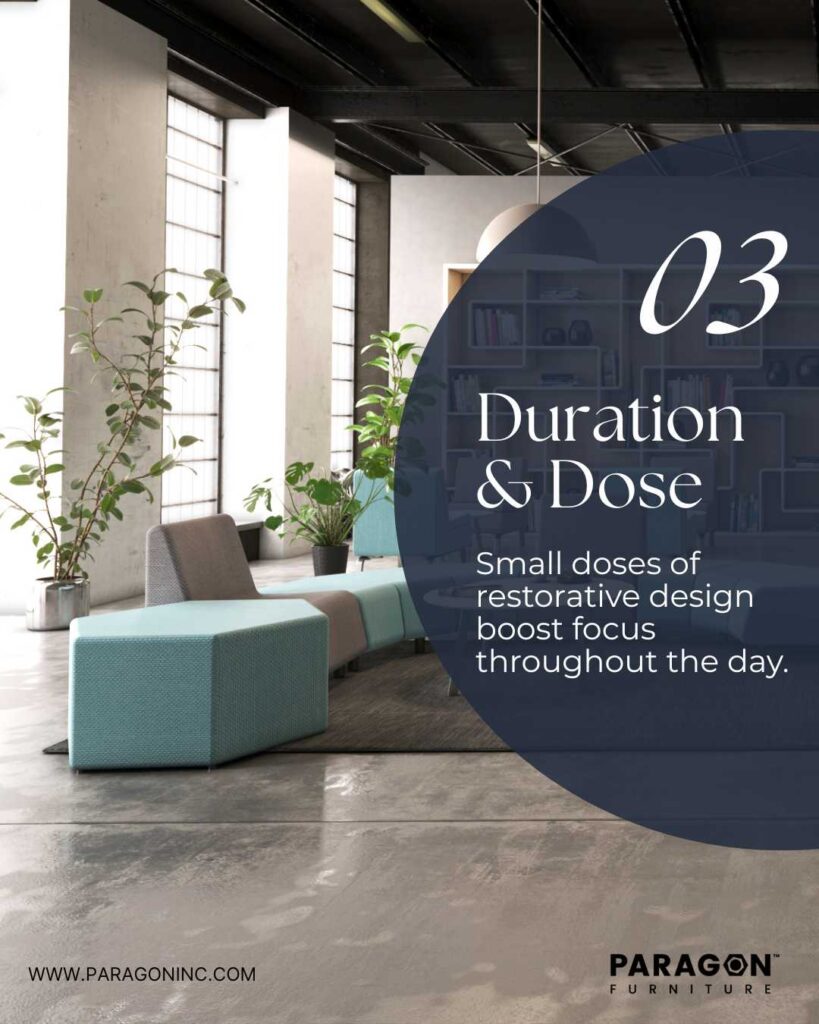
Restorative benefits don’t require hours outdoors. Even small “doses” of nature or flexible design throughout the day help restore attention.
Design in Action:
Mobile furniture allows teachers to adjust layouts depending on activity—structured focus time vs. collaborative reset.
Rotating through standing tables, soft seating, and traditional desks creates a rhythm that balances focus with restoration.
Positioning furniture near windows, or using finishes inspired by nature, gives students mini “nature breaks” without leaving the classroom.
Beyond Attention: Mood, Rumination & Mental Health
The Science:
Natural environments are proven to reduce rumination—those repetitive negative thought loops that fuel stress. Gentle, ambient stimuli help regulate emotions and support social-emotional wellbeing.
Design in Action:
“Calm corners” with soft seating and open shelving offer safe reset spaces for students.
Clutter-free layouts supported by smart storage solutions reduce stress for both students and teachers.
Flexible furniture supports both structured lessons and moments of calm, giving students emotional balance throughout the day.
Physical & Physiological Impacts
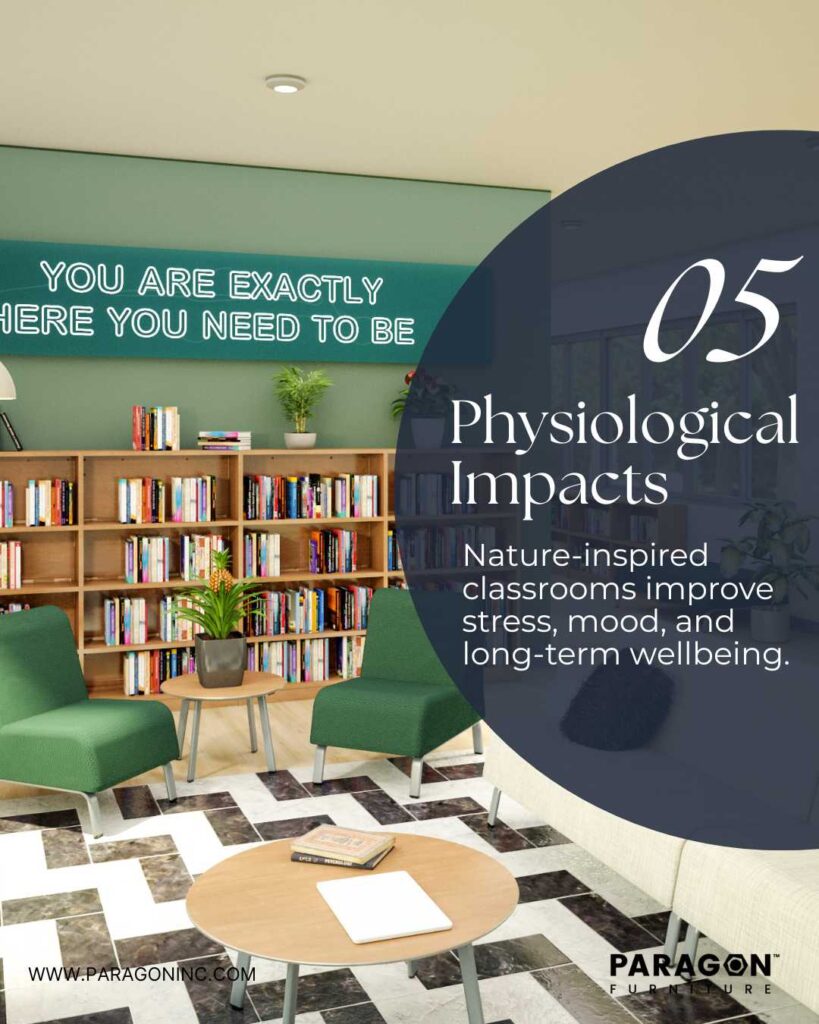
The Science: Restorative environments don’t just feel good—they improve physical health, lowering heart rate, reducing stress hormones, and supporting long-term wellbeing.
Design in Action:
Furniture with natural finishes and durable surfaces contributes to a healthier classroom atmosphere.
Window-facing workstations, mobile tables, and light-filled zones integrate physical and mental benefits of nature indoors.
Living elements—plants, aquariums, or natural textures—bring the outdoors inside, reinforcing calm and connection.
Conclusion
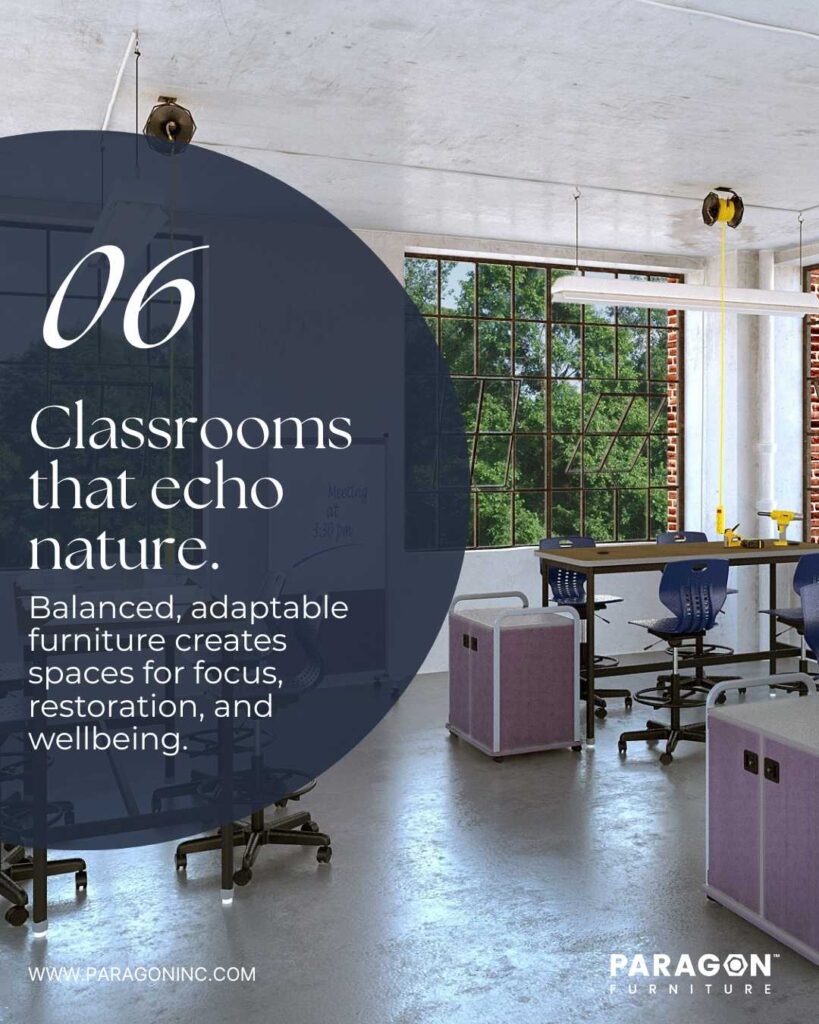
The conversation between Dr. Huberman and Dr. Berman highlights a powerful truth: environments are active participants in learning. Classrooms that echo the restorative qualities of nature can help students recover from fatigue, regulate emotions, and engage more fully.
Furniture plays a central role. When schools invest in adaptable, calming, and balanced classroom design, they aren’t just choosing desks and chairs—they’re creating environments that boost focus, support mental health, and build long-term wellbeing.
At Paragon, we design with this science in mind. By blending adaptability, natural inspiration, and purposeful design, our furniture helps schools create spaces where students don’t just learn—they flourish.