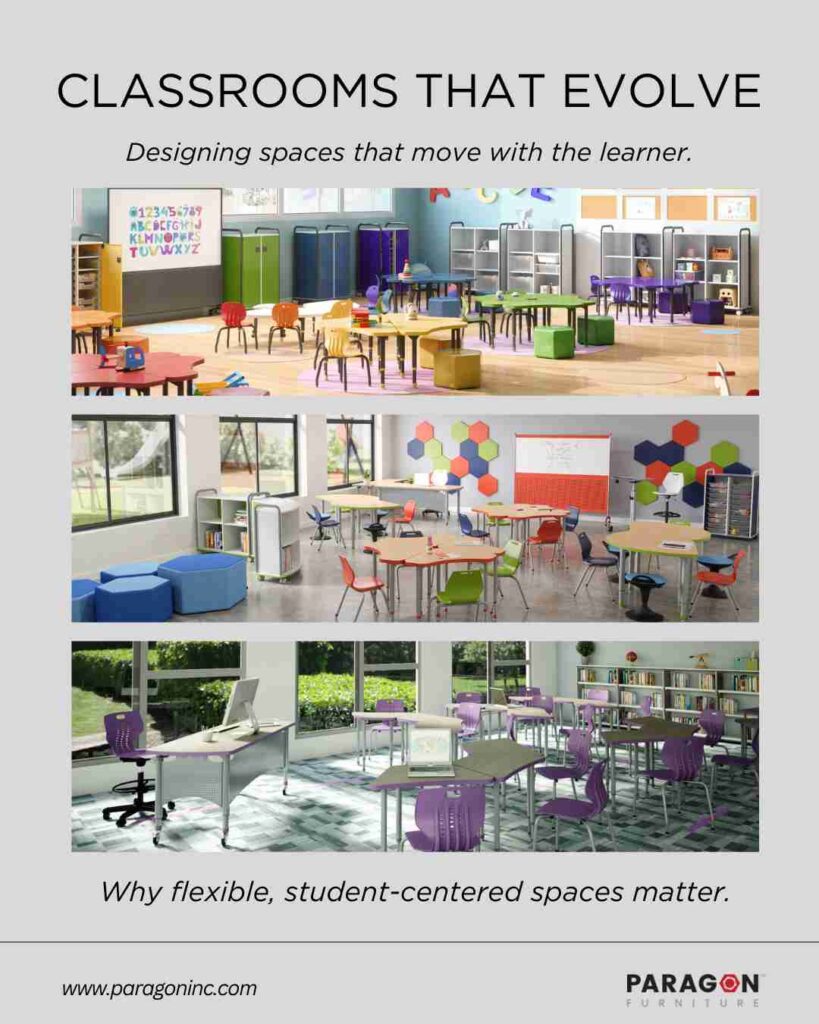
Designing classrooms that truly support learning means creating spaces that move with the learner. From flexible furniture to adaptable layouts, today’s environments are built to shift seamlessly between focus, collaboration, and instruction. Discover how evolving classrooms, guided by choice, movement and connection, are transforming education into a more dynamic, engaging and empowering experience.
Classrooms That Evolve
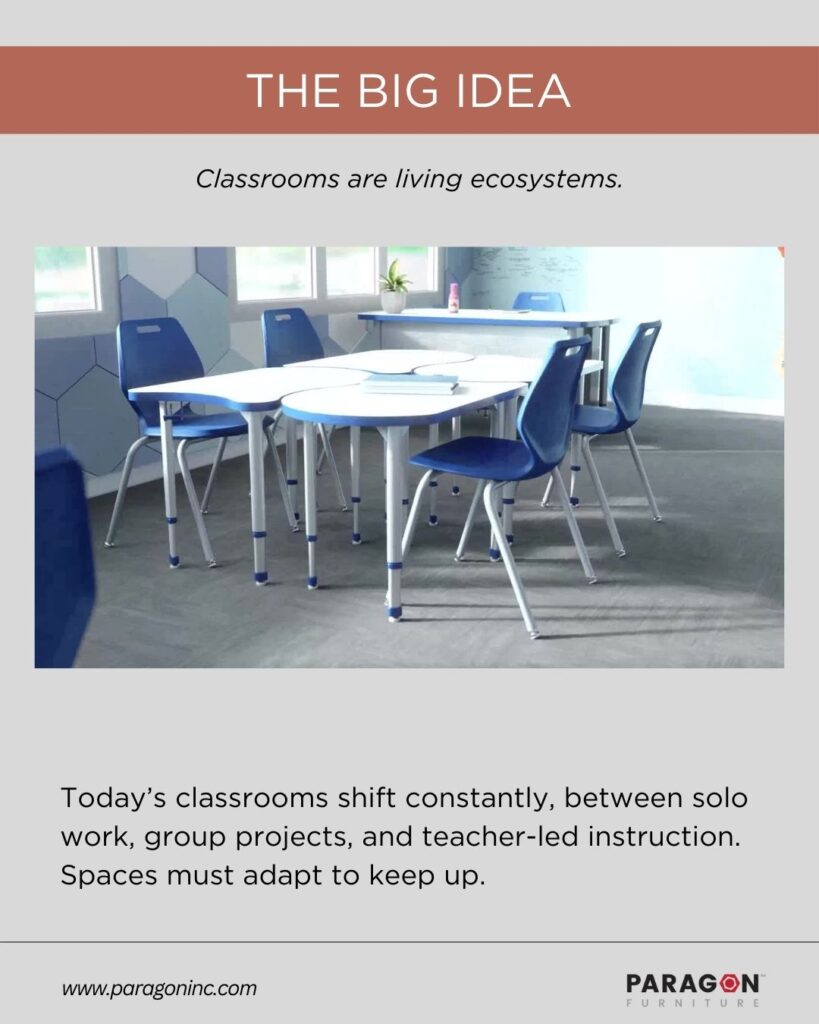
Today’s classrooms aren’t static rows of desks. They’re active, living ecosystems that must keep pace with the rhythms of learning. Students move between independent work, group collaboration, and teacher-led instruction multiple times a day. Classrooms that adapt to these shifts don’t just hold learning, they amplify it.
Big Idea: Classrooms as Ecosystems
Learning environments should be thought of as ecosystems, not containers. An ecosystem thrives when all its parts are connected, flexible, and responsive. Similarly, classrooms succeed when they can transition seamlessly:
Independent work – space for focus
Group collaboration – space for connection
Teacher-led instruction – space for guidance.
What Classrooms Need
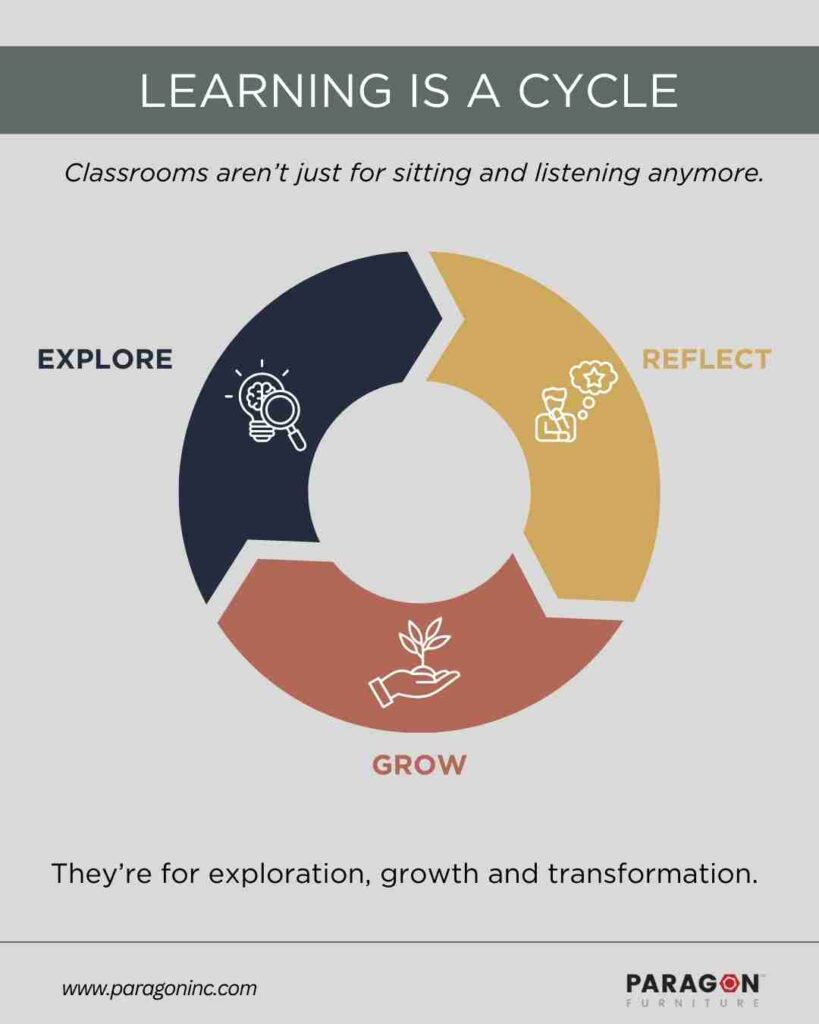
Education is not linear, it’s cyclical. Students don’t move from “point A to B” in one straight line. Instead, they loop through exploration, reflection and growth repeatedly. The best classrooms anticipate this natural rhythm and provide space for each stage.
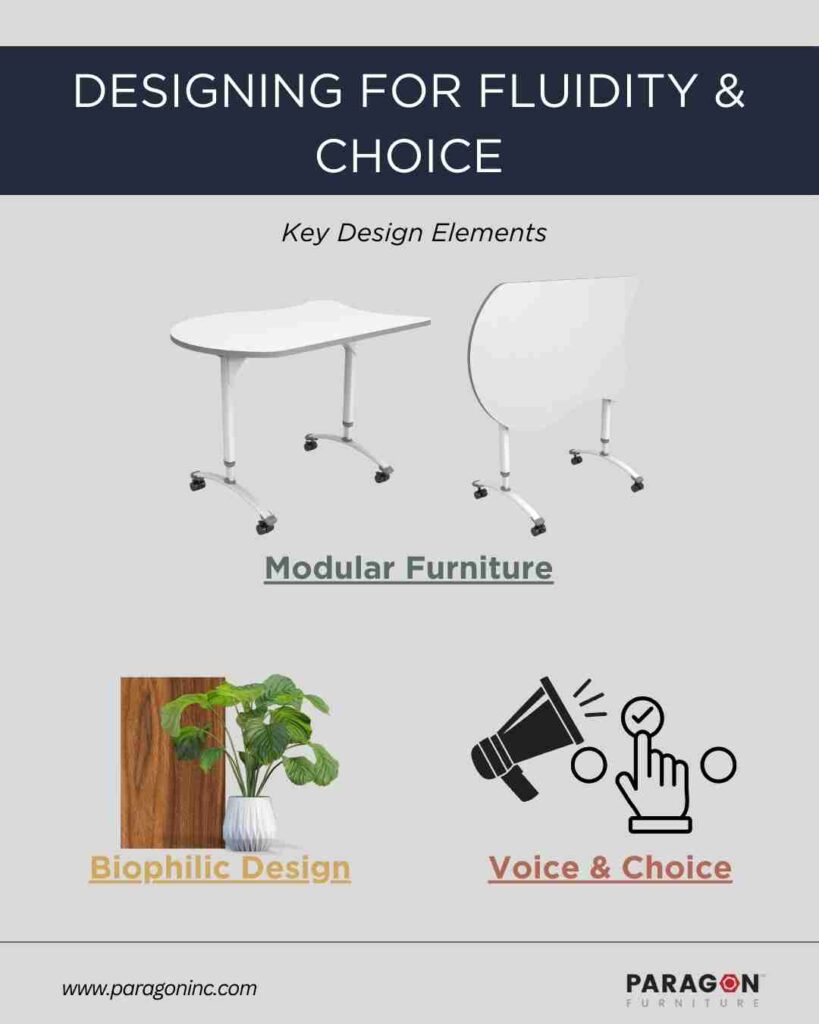
Designing for Fluidity & Choice
Modular Furniture: Mobile desks and stackable chairs encourage quick reconfiguration, supporting multiple teaching strategies. Research shows flexible seating boosts collaboration and engagement.
Biophilic Design: Natural light, plants, and organic textures improve well-being, reduce stress and increase focus.
Voice & Choice: Students learn best when they feel agency in shaping their environment, where to sit, how to learn, and how to collaborate.
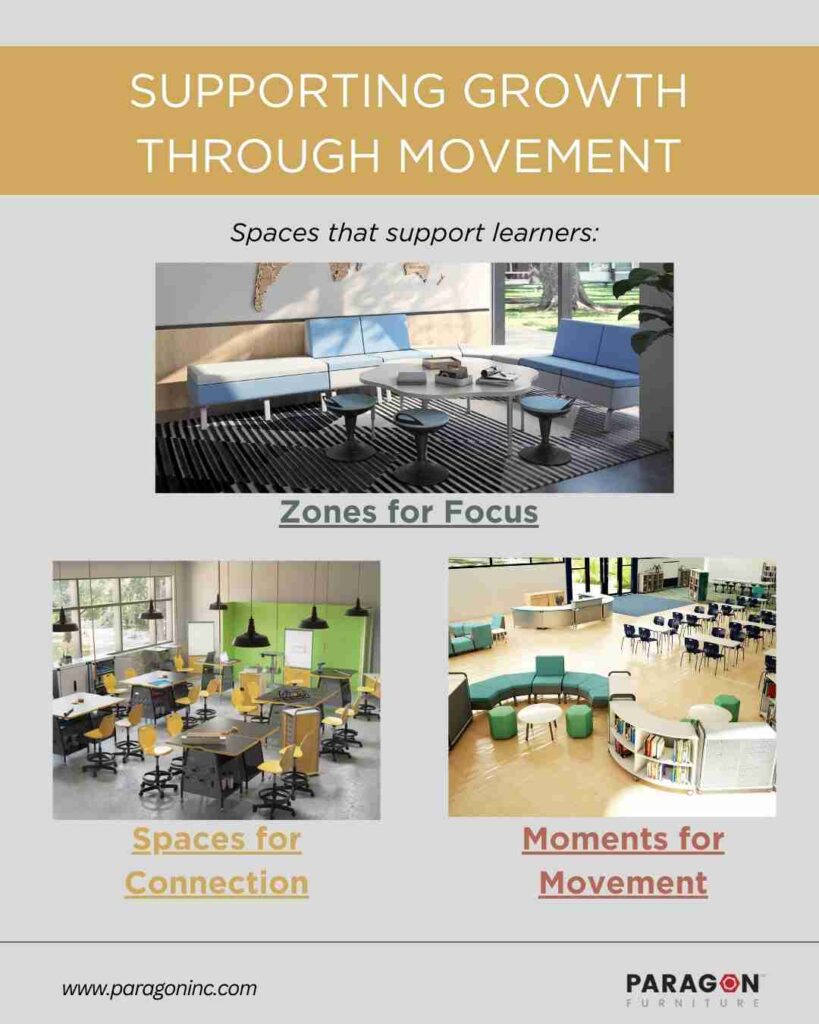
Supporting Growth Through Movement
Adaptable classrooms create zones that honor different ways of learning:
Zones for Focus: Spaces designed for deep, distraction-free work.
Spaces for Connection: Collaborative hubs for peer-to-peer learning.
Moments for Movement: Flexible areas where students can reset, shift posture, and engage physically with learning.