Classroom design for SEL helps create learning spaces where students feel safe, connected and ready to learn.Calming colors, flexible layouts, sensory comfort and welcoming spaces can support social emotional learning by encouraging belonging, collaboration, emotional safety and lifelong success.
How Design Aesthetics & Intent Support SEL:
A design-first approach recognizes that classroom design for SEL is not merely decorative. How a space looks and feels shapes how students interact and learn.
Below is how design intent, choices around color, form, flexibility, sensory experience and spatial layouts, align with SEL and promote environments where students thrive.
The Role of Aesthetics & Intent in SEL:
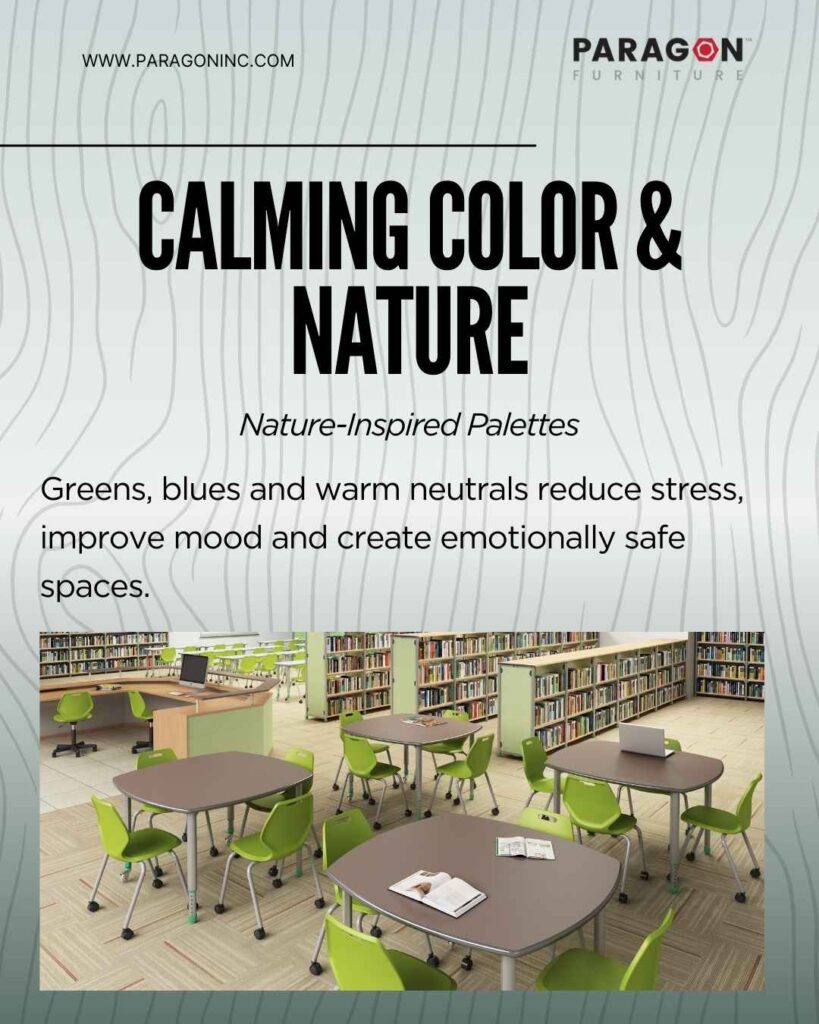
Calming Color & Natural Elements: Color palettes, materials, and finishes that reflect nature, soft greens, muted blues, warm neutrals, can reduce stress, improve mood, and support emotional regulation. Natural light and views of greenery also help in promoting well-being. According to research, design guides for learning environments identify natural materials, daylight, connection to views of nature as evidence-based strategies that support SEL goals. (HKS Architects)
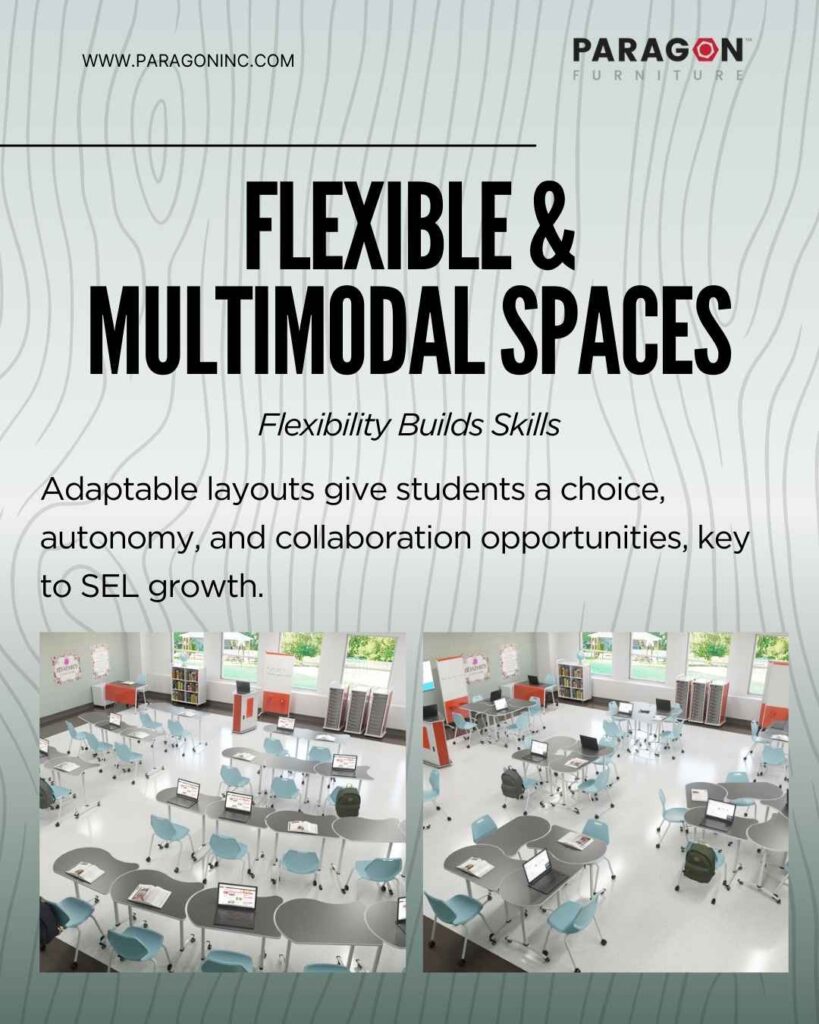
Flexible & Multimodal Spaces: SEL involves self-awareness, self-management, and social awareness skills that are reinforced when students have choice in how they learn. Spaces and furnishings that adapt, allowing movement, small group collaboration, quiet reflection, or full-class instruction, helps students practice autonomy and respect for group norms. The “How Design Can Support Social and Emotional Learning” guide emphasizes variety, flexibility, and multimodal affordances as essential. (HKS Architects)
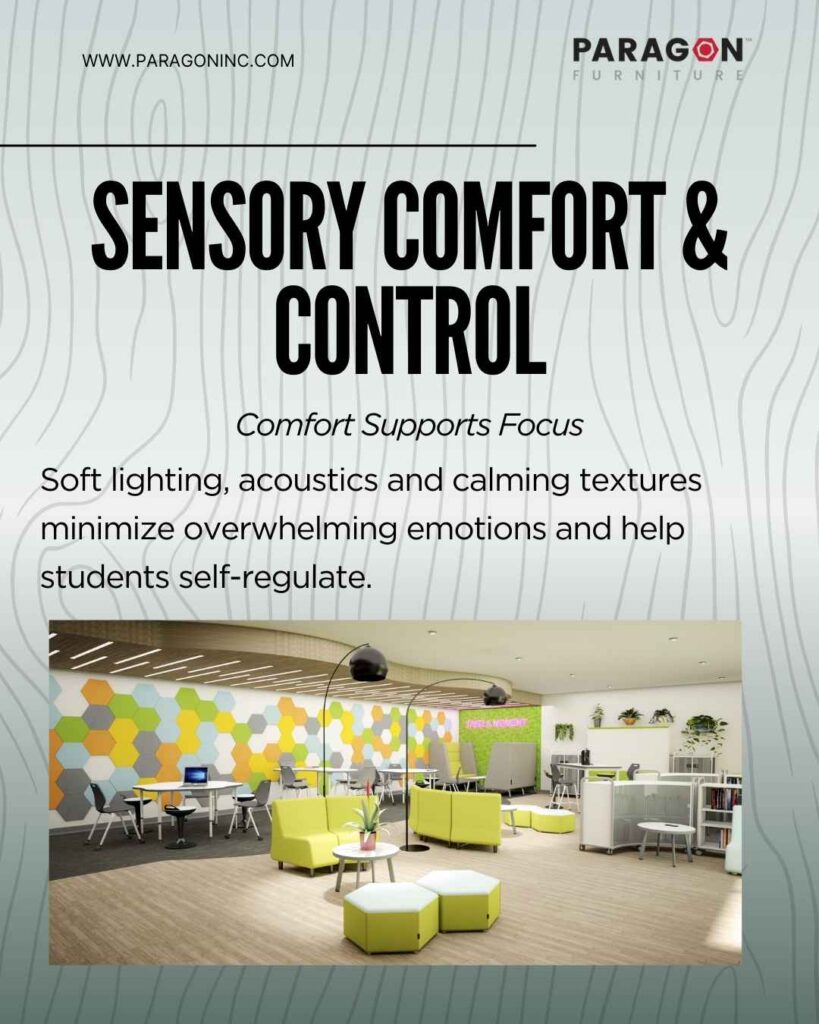
Sensory Comfort & Control: Sensory overload (harsh lighting, poor acoustics, overly busy walls or decor) can increase anxiety and reduce focus. Giving students some control, through lighting options, calm materials, soft edges, acoustic buffering, helps them regulate emotional responses. Empirical strategies in recent design research highlight sensory control, quality acoustics, and legible visual complexity among the design features that support SEL. (DIRTT)
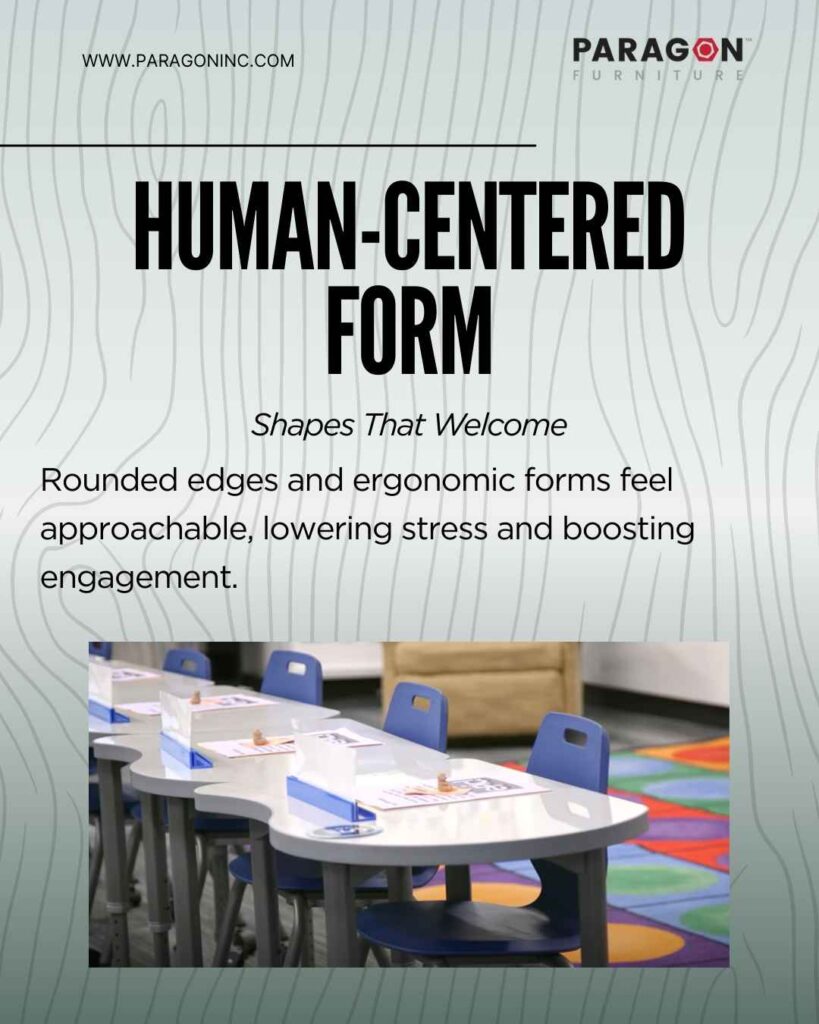
Form, Proportion, & Human-Centered Shapes: Rounded edges, gentle curves, non-rigid forms feel more welcoming. Furniture and architecture that avoid overly hard lines, that invite interaction, that consider ergonomics, support physical well-being and also reduce perceived threat (real or imagined) in the environment. Studies in aesthetic classroom design point out that when students perceive their classrooms as more beautiful or more human-friendly, their engagement and motivation go up. (USFCA Repository)
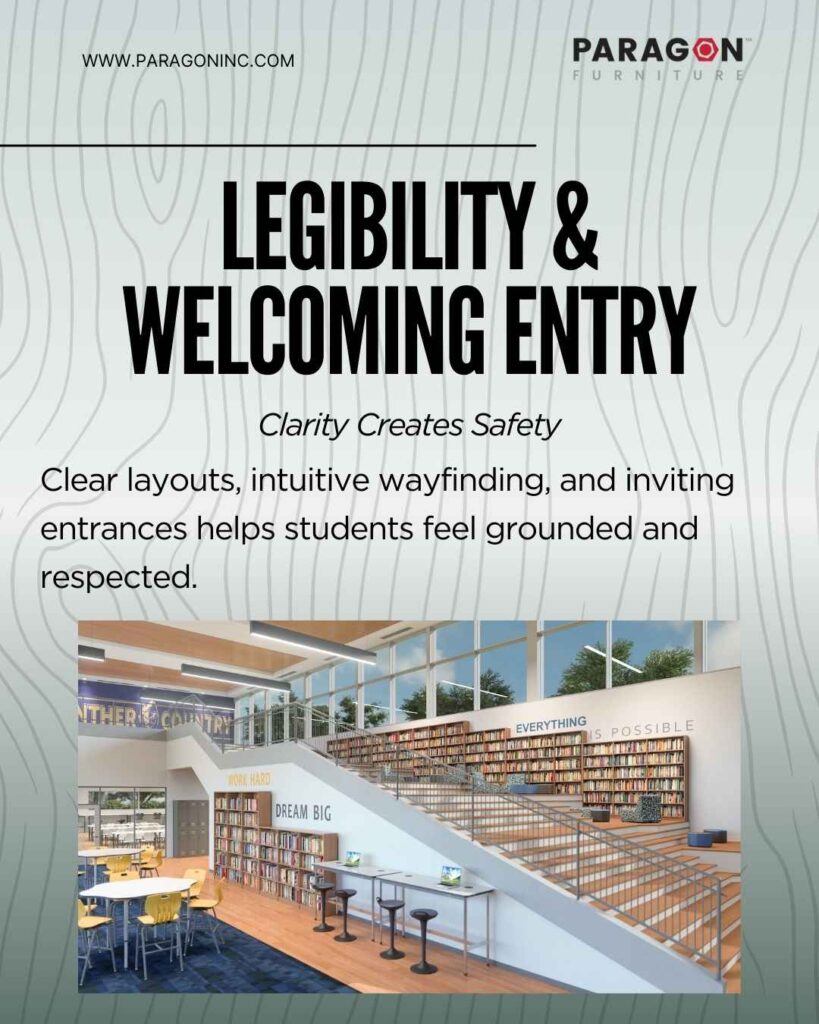
Visual Legibility, Wayfinding & Welcoming Entry: Students’ emotional safety is influenced by how easily they can orient themselves in a space. Clear, intuitive layout, visible community or cultural cues, welcoming entrances: these help students feel grounded and respected. SEL design guides include elements like legibility, welcoming entry, cultural space among their strategies. (DIRTT)
Translating Design Aesthetics into Practice.
Palette that soothes: Colors inspired by nature, soft greens, muted neutrals, calming accent tones, help create emotionally safe and calming learning zones.
Rounded, inviting furniture form: Furniture that feels approachable can reduce barriers. Students are more likely to move, group up, or choose different work modes.
Furniture with flexible configurations: Pieces that allow easy reconfiguration (for group work, individual focus, perch or stool seating) support emotional autonomy and collaboration.
Design for multiple sense: Materials, edge profiles, tactile surfaces, and the ability to adjust location or light or shade all contribute to comfort.
Thoughtful transitions and entries: Welcoming zones, visual cues, spaces for arrival/exit, and spatial hierarchy that moves from public to private or quiet zones support emotional safety.
Why This Matters: Outcomes & Long-Term Impact
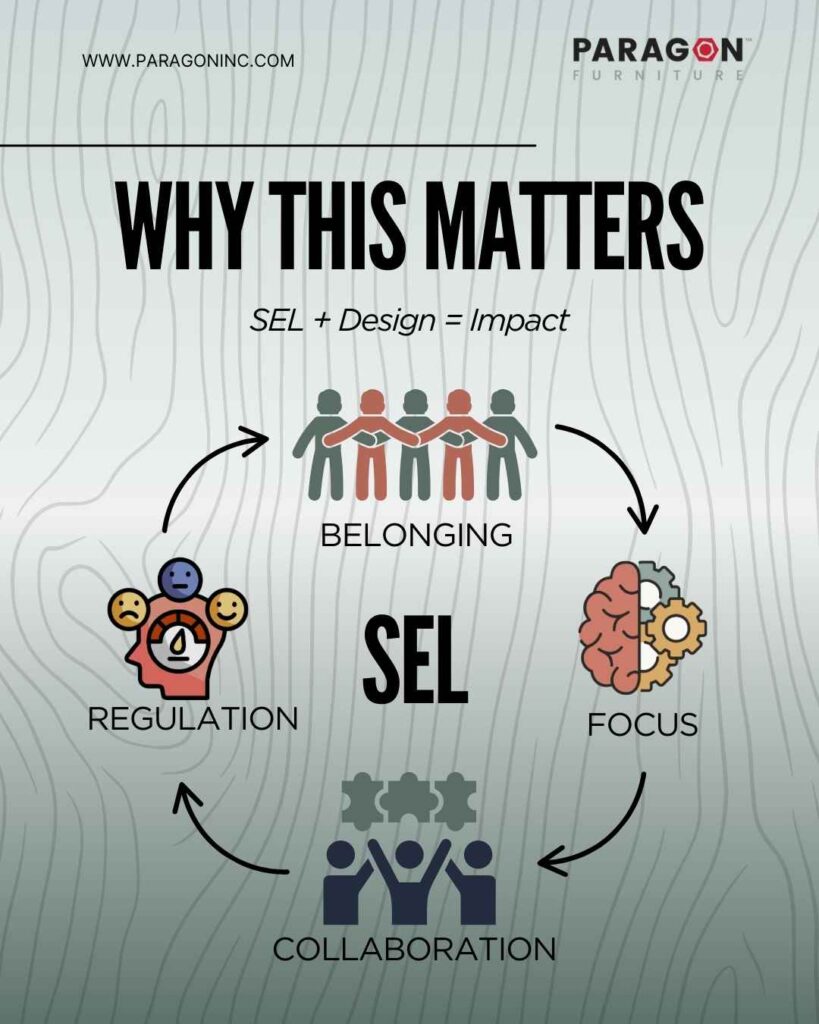
Integrating good design aesthetics in support of SEL does more than look nice. According to the Learning Policy Institute, SEL programs deliver consistent, reliable effects on students’ social, emotional, behavioral, and academic outcomes. They improve positive relationship skills, reduce disruptive behavior, and increase engagement.
Learning Policy Insitute: Design research underscores that environment that allow for variety, human comfort, sensory control, and natural elements help support those outcomes by reducing stress, increasing belonging, boosting attention, and enabling emotional regulation (HKS Architects, 2EDspaces, Pedagogy, Space & Tech)
Conclusion
Classroom design for SEL is a core tool for creating supportive learning environments, not simply an aesthetic consideration.
Greenberg, M. T. (2023). Evidence for Social and Emotional Learning in Schools [Brief]. Learning Policy Institute. Learning Policy Institute.
Barraza, G. (2021). The Role of Aesthetics in Classroom Design: Implications for Engagement and Equity (Master’s thesis). University of San Francisco. USFCA Repository
HKS Inc / Renae Mantooth, PhD. (2023). How Design Can Support Social and Emotional Learning. HKS Architects.
Wideman-van der Laan, Ymkje. (2023). How Innovative Classroom Design Can Boost Social-Emotional Learning. EDspaces / Ed-Spaces Stories. EDspaces – Pedagogy, Space & Tech.
DIRTT / HKS “Impact of Space on Social and Emotional Learning” design strategy summary. DIRTT.